Develop self-carriage in the body
Improve self-carriage in the mind


From mindless circling to self-carriage in your horse
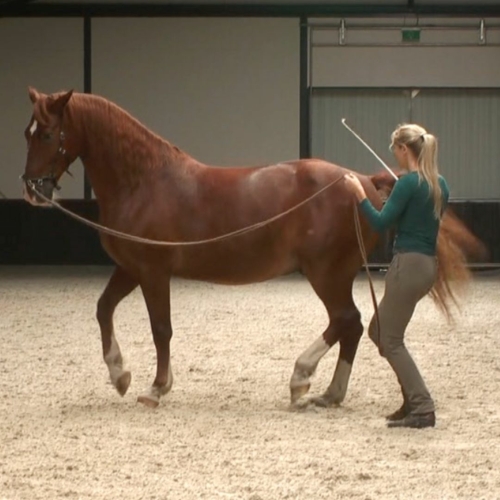
When your horse struggles with rhythm, balance or natural asymmetry, this will show up in every gait and every transition.
Longeing will help you improve your horse's balance and movement.
From a distance, you help your horse develop symmetrically in body and limbs.
In Straightness Training, we don't longe a horse to burn off energy or wear it out:
Effective longeing, is about developing balance and suppleness in both body and mind.
Ten minutes of longeing where your horse stretches the back muscles, lowers the neck, and releases tension creates more change than endless mindless circles.
What is longeing
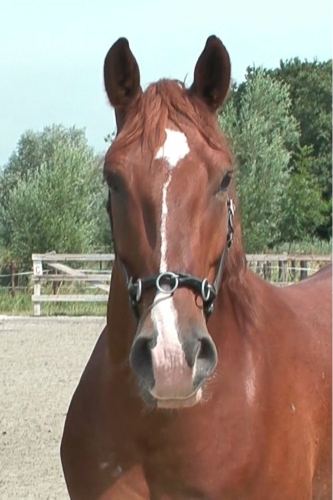
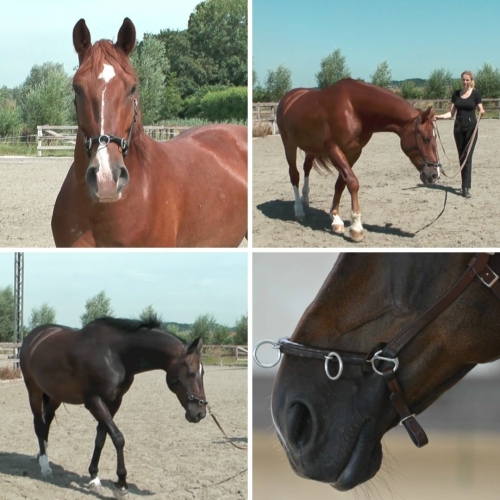
Longeing means training your horse from the ground using a cavesson and a longe line.
When your horse is well prepared in groundwork, you can begin to develop the same qualities:
From a distance, you improve balance, suppleness, rhythm, and coordination.
Why longeing works
Every horse is naturally asymmetrical.
This means:
Because of this, most horses:
If we don’t address this, the horse develops stiffness, and resistance.
Longeing helps you change this.
So the real reason why longeing works, is because
What you develop in longeing
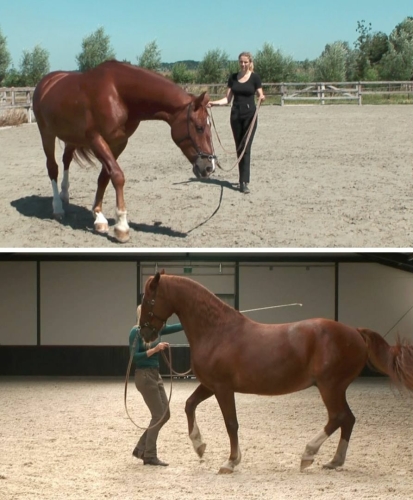
From a distance, you help your horse develop and improve:
This is how longeing develops self-carriage in both body and mind.
Longeing is one of the five training pillars of Straightness Training. Together, the pillars create a logical system that develops your horse step by step.
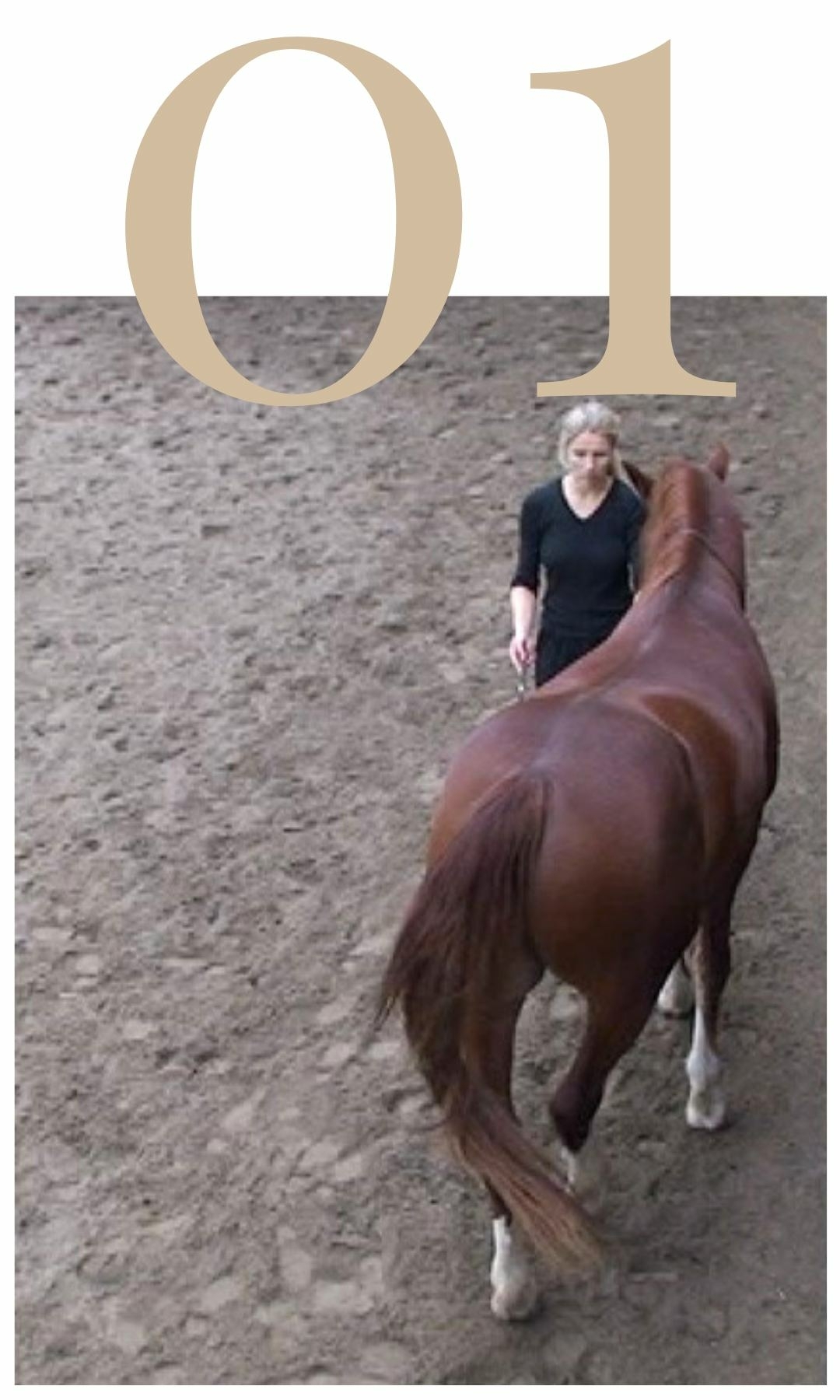 Groundwork
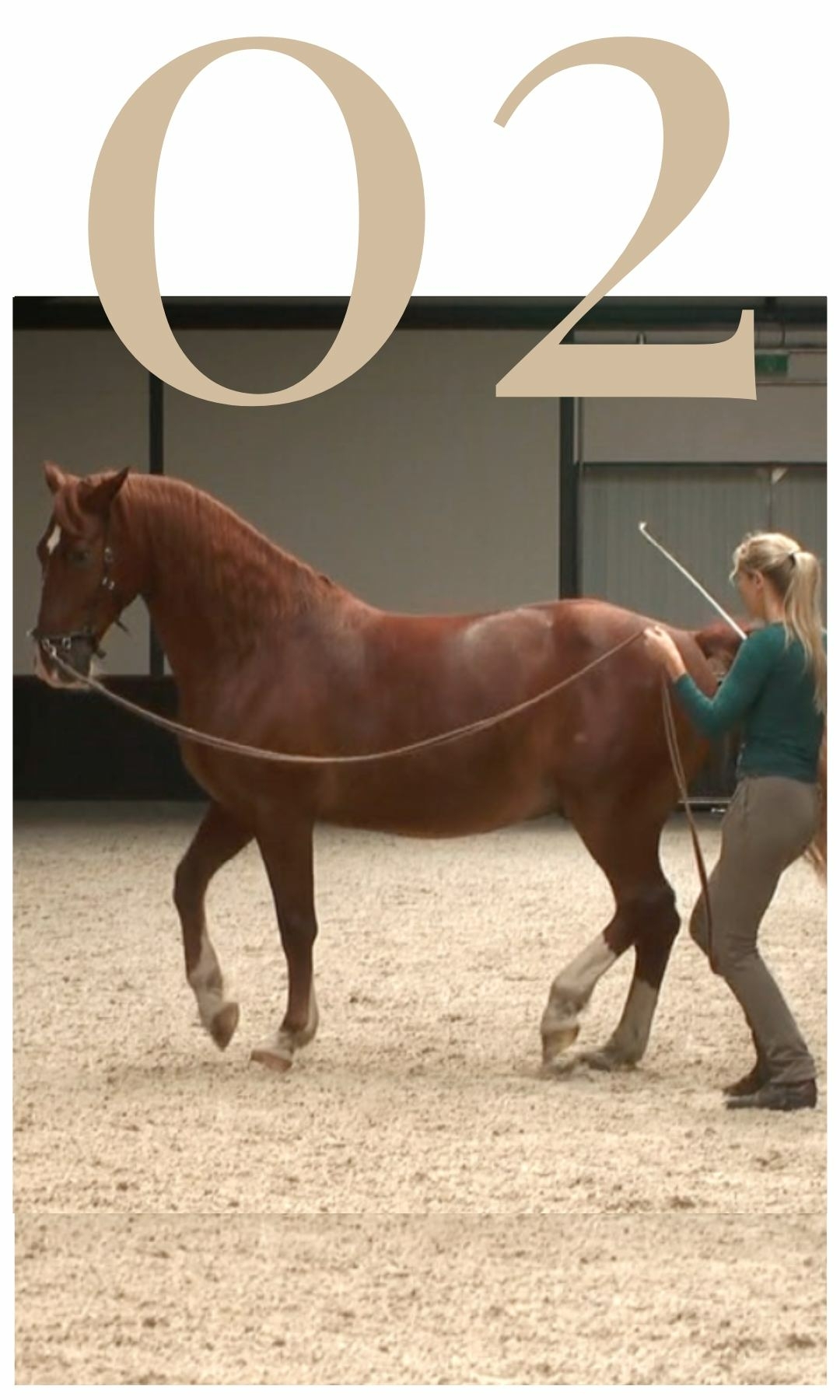 Longeing
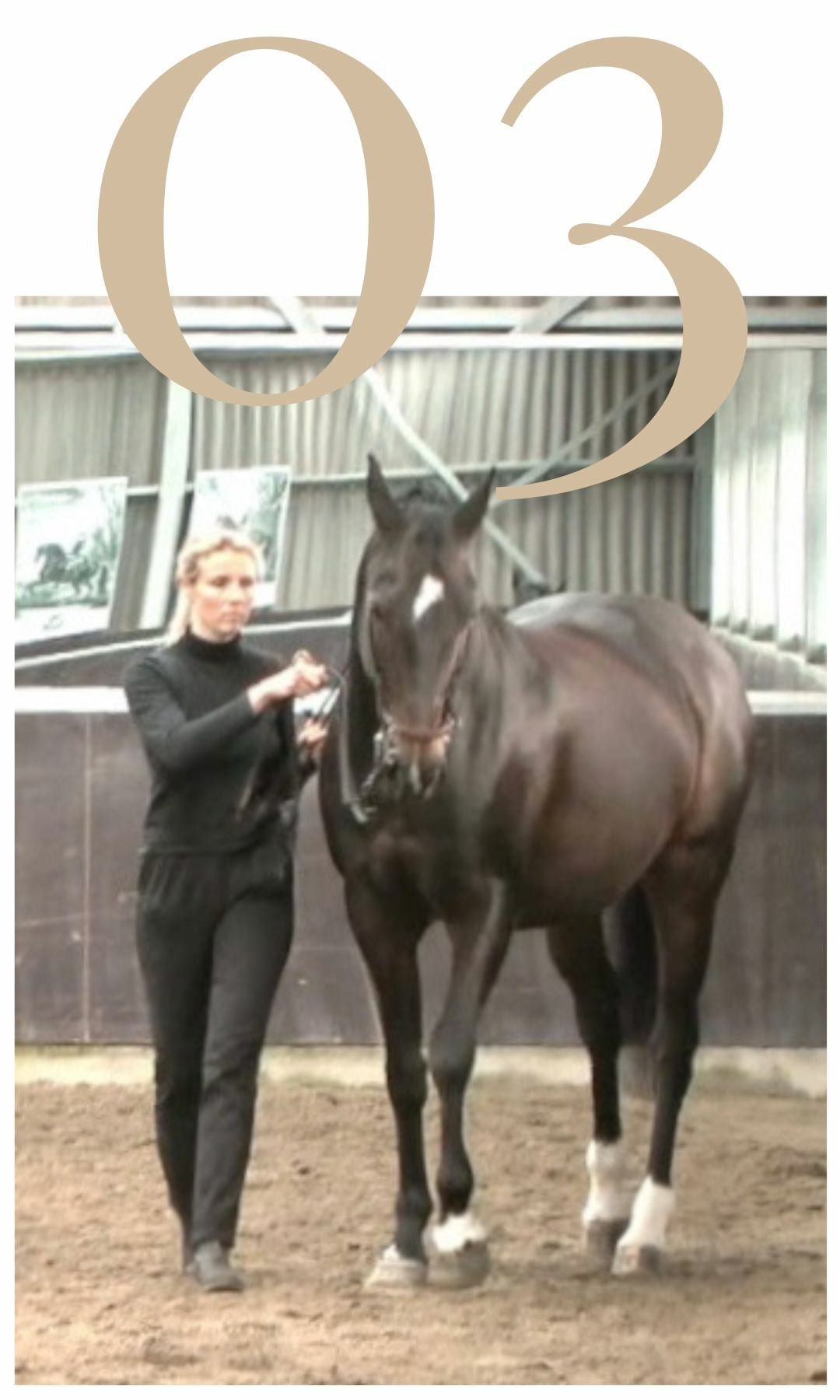 Work in Hand
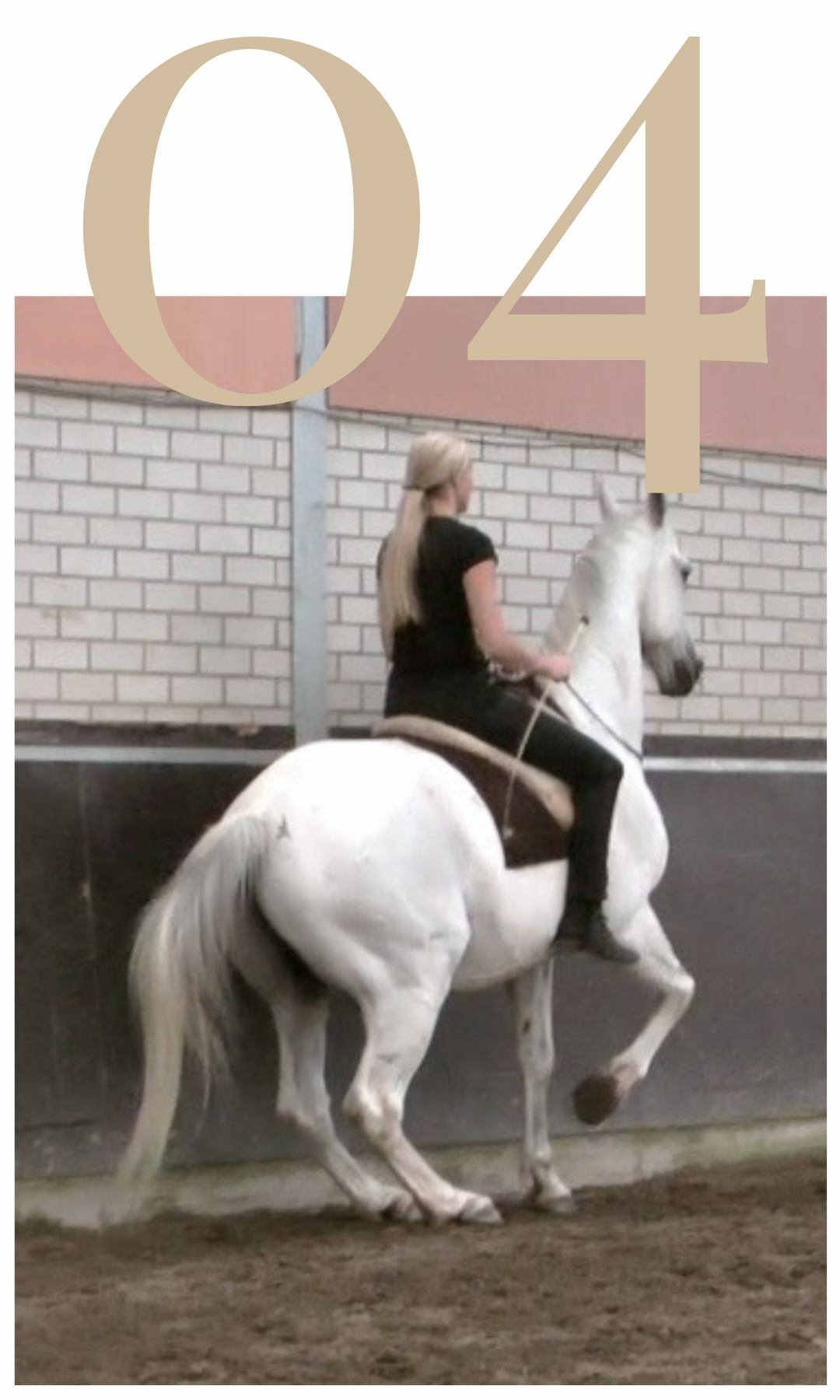 Riding
 Liberty
Each pillar builds on the previous one. Groundwork prepares your horse for longeing. Longeing helps your horse develop in walk, trot, and canter and prepares your horse for riding.
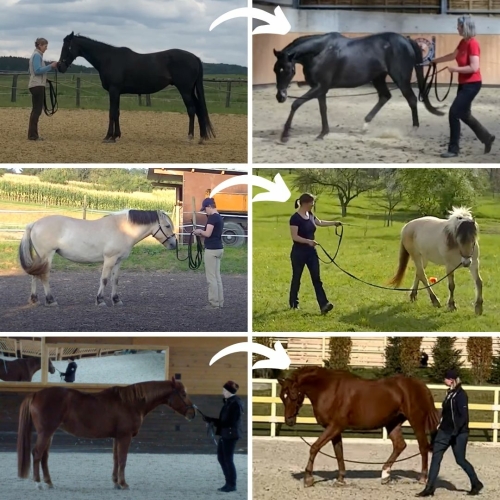
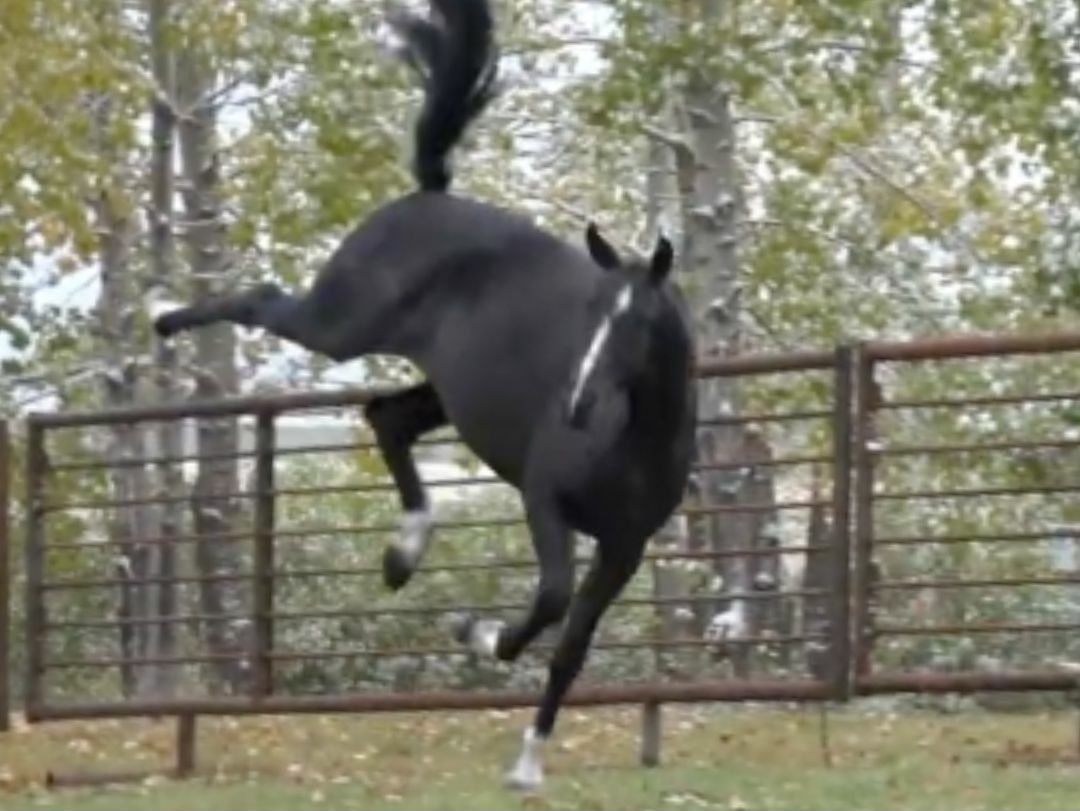
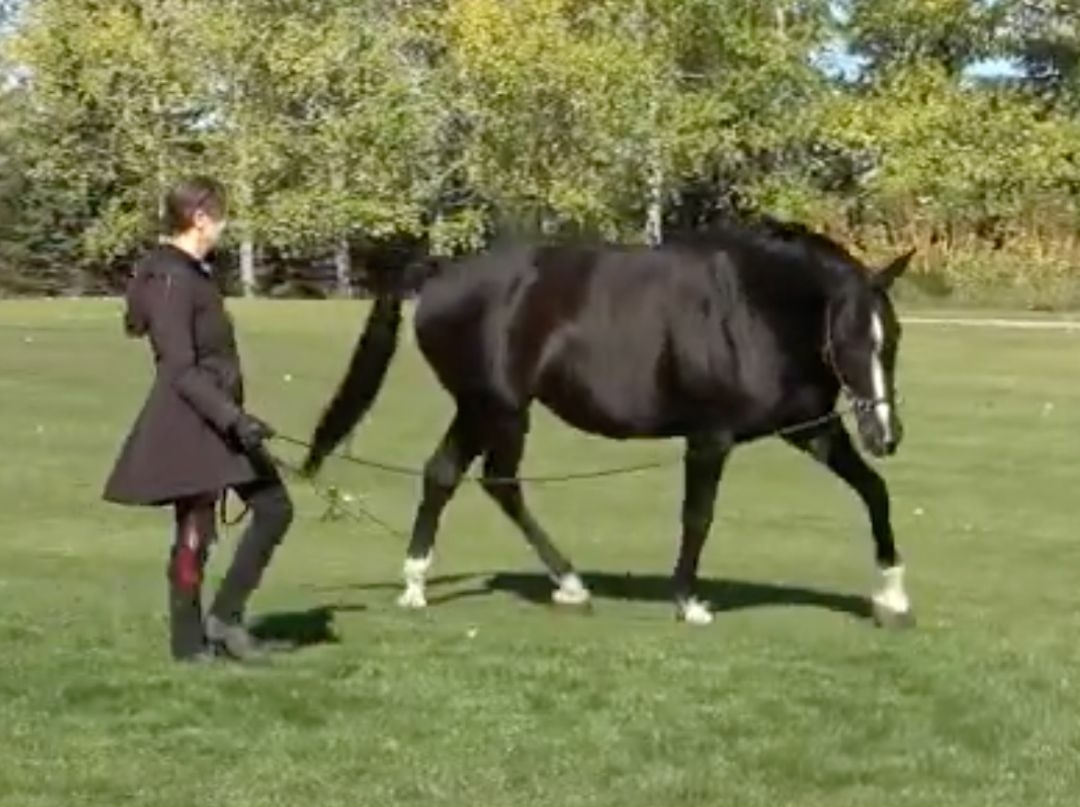
What changes when you do groundwork & longeing
Before
Basic longeing exercises
Groundwork starts with simple but essential gymnastic exercises:
These exercises help your horse develop symmetrically in body and limbs.
Even short training sessions can create powerful changes over time.
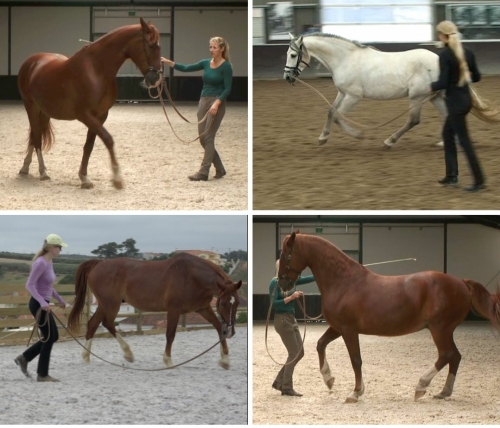
Once your horse can maintain balance and LFS in walk, you can develop this further in trot and canter.
You can introduce:
Over time, this leads to:
As your horse becomes stronger and more balanced, it will start to carry more weight on the hindquarters. This is where true collection begins.
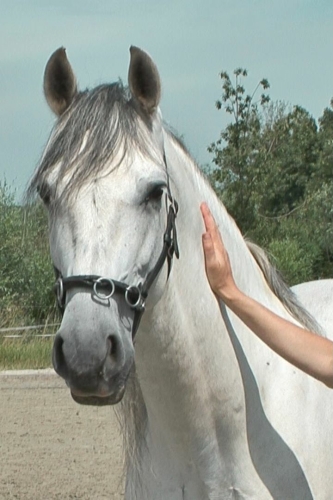
How to start
Longeing always starts with groundwork.
So first, you practice the first 3 keys of Straightness Training:
From there, you gradually increase the circle.
1. What is longeing (lunging) used for?
Longeing is used to develop your horse’s balance, suppleness, shape, tempo, and rhythm. It allows you to influence movement from a distance. It also supports your horse when learning the rider’s aids, especially when starting under saddle.
2. Is longeing just letting the horse run in circles?
No. Correct longeing is structured and purposeful. It helps your horse develop balance, coordination so your horse can carry itself without leaning on you. .
3. Do I need special equipment for longeing?
In Straightness Training we use a cavesson, line and whip. That's all you need to get started. What matters most is how you use it, not what you use.
4. How often should I longe my horse?
It depends on your horse’s balance. If your horse falls in on the circle, it’s better to stay with groundwork until the balance has improved. When starting a horse under saddle, longeing can be used more frequently to help the horse understand the aids.
5. How long should I longe my horse?
Short, focused sessions are more effective than long, unfocused ones. You can include longeing as part of your regular training, or use it as a cooling-down after more intensive work.
What most riders completely miss, and how it's affecting your horse.
In this free guide, you’ll discover: