Better communication
Build strength
Create collection

From groundwork to refined communication with your horse
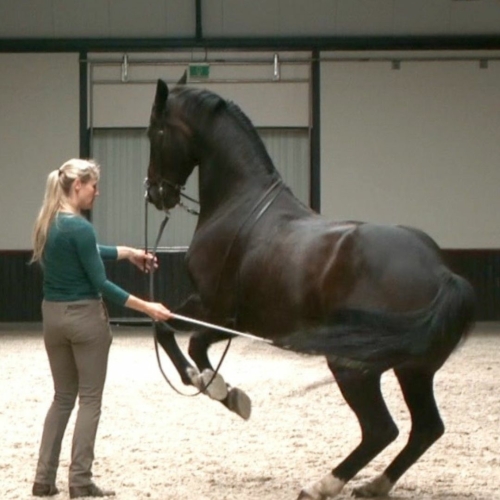
Many riders try to improve their horse while riding.
And many advanced movements are difficult to teach from the saddle.
Once you are in the saddle, you can no longer see exactly what is happening in your horse’s body.
Work in hand brings you back to the ground, so you can really observe what your horse is doing, and guide your horse step by step.
You can see:
This is why work in hand makes your training more clear.
What is work in hand
Groundwork is done with one rein. This helps your horse understand bending and basic communication. But riding is done with two reins.
Work in hand is the step in between.
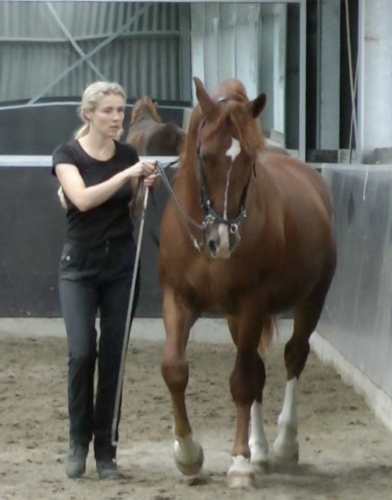
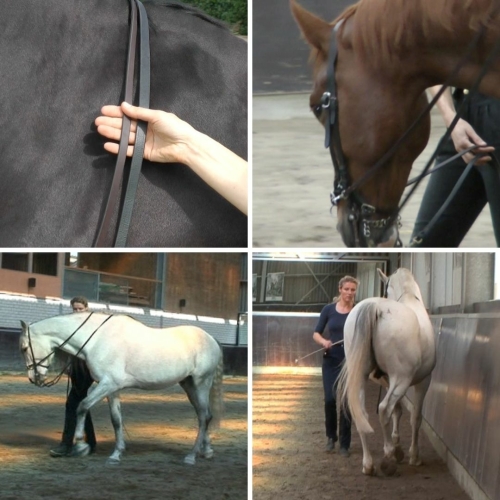
Work in hand means training your horse from the ground, while walking next to your horse using a cavesson and two reins - an inside and outside rein.
This means:
This helps your horse understand how the reins work before you sit on the horse.
That’s why work in hand is the bridge between groundwork and riding.
Why work in hand works
Every horse is naturally asymmetrical.
This asymmetry is not only visible in movement, but also in how the horse carries weight.
Because of this, most horses:
Work in hand helps you change this and prepare your horse for riding.
You can help your horse:
This is where your horse learns to carry instead of push.
Once your horse can carry himself properly, he can also carry you in a much better way.
So the real reason why work in hand works, is because
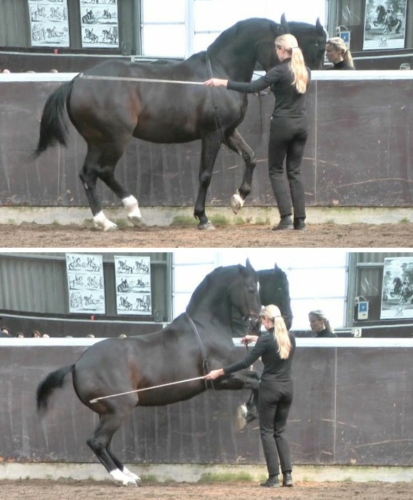
What you develop in work in hand
By working from the ground, you help your horse develop and improve:
This is where your training becomes more refined, and your horse becomes well prepared for riding.
Work in hand is one of the five training pillars of Straightness Training. Together, the pillars create a logical system that develops your horse step by step.
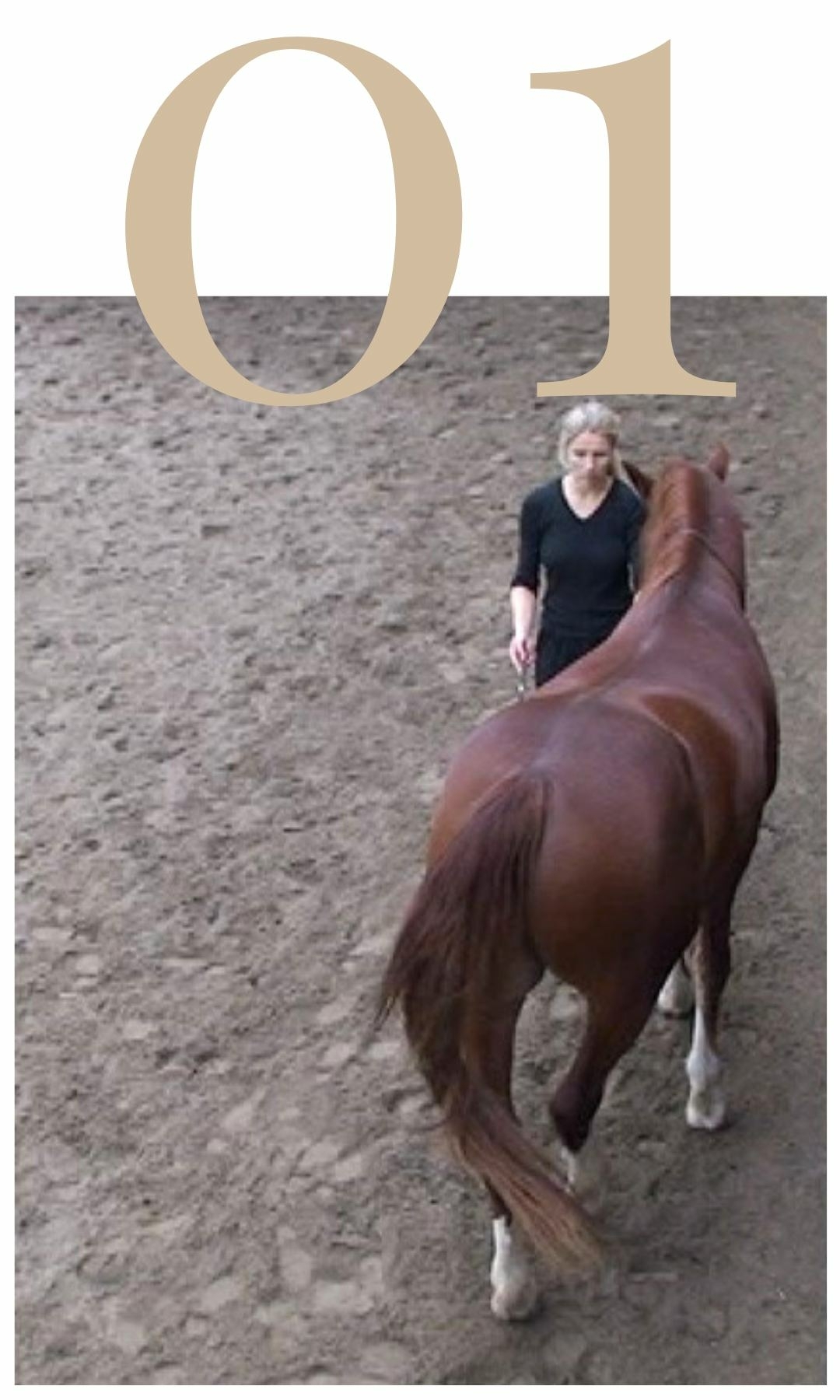 Groundwork
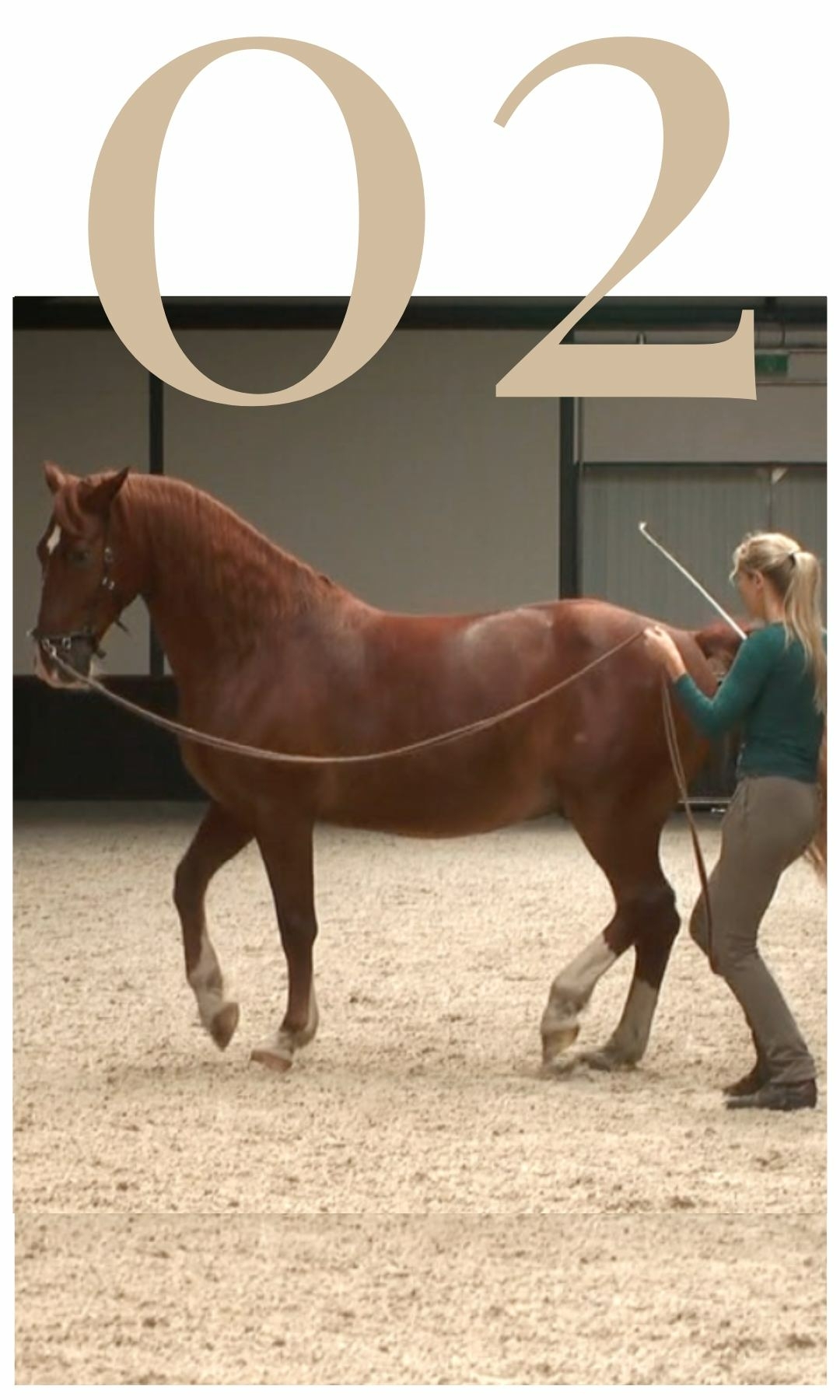 Longeing
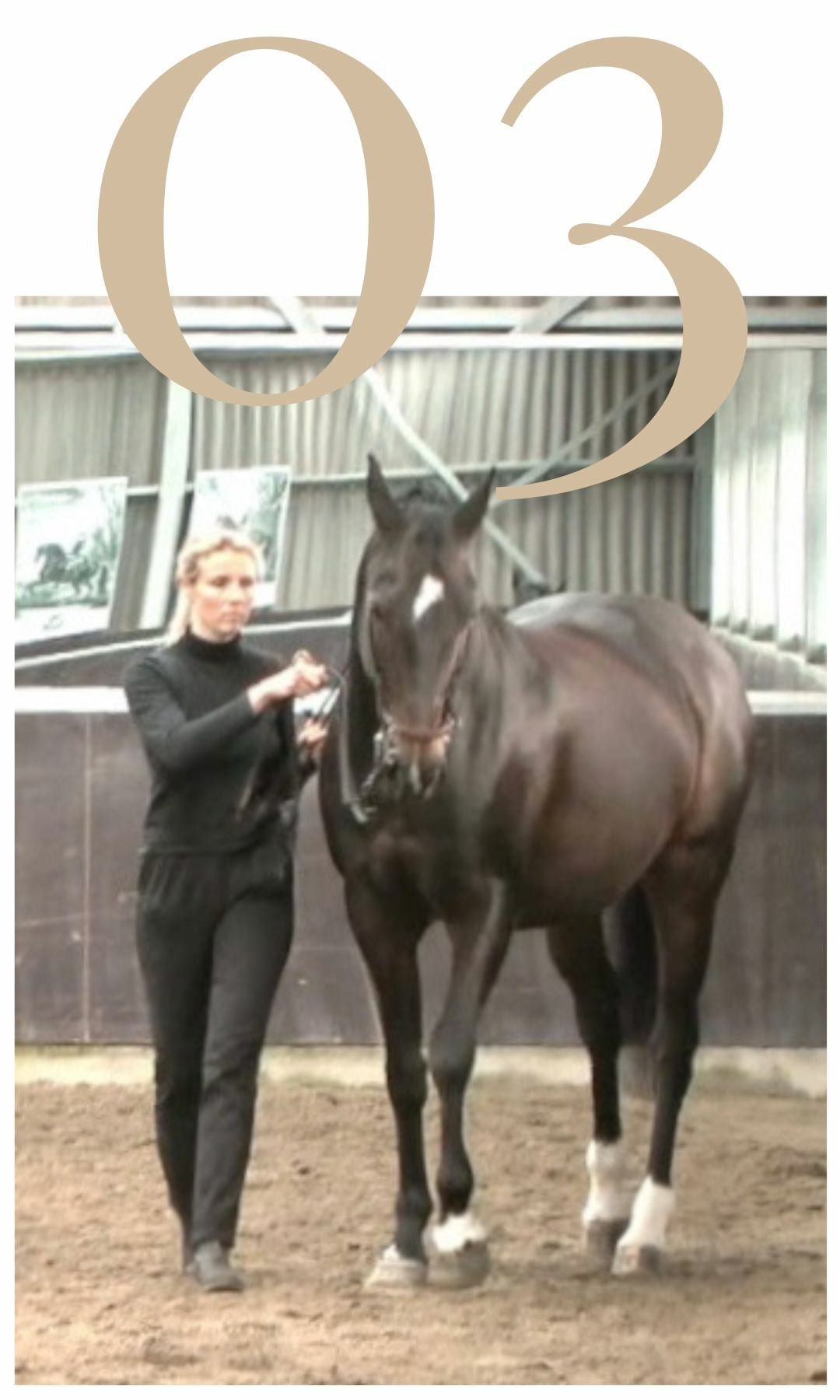 Work in Hand
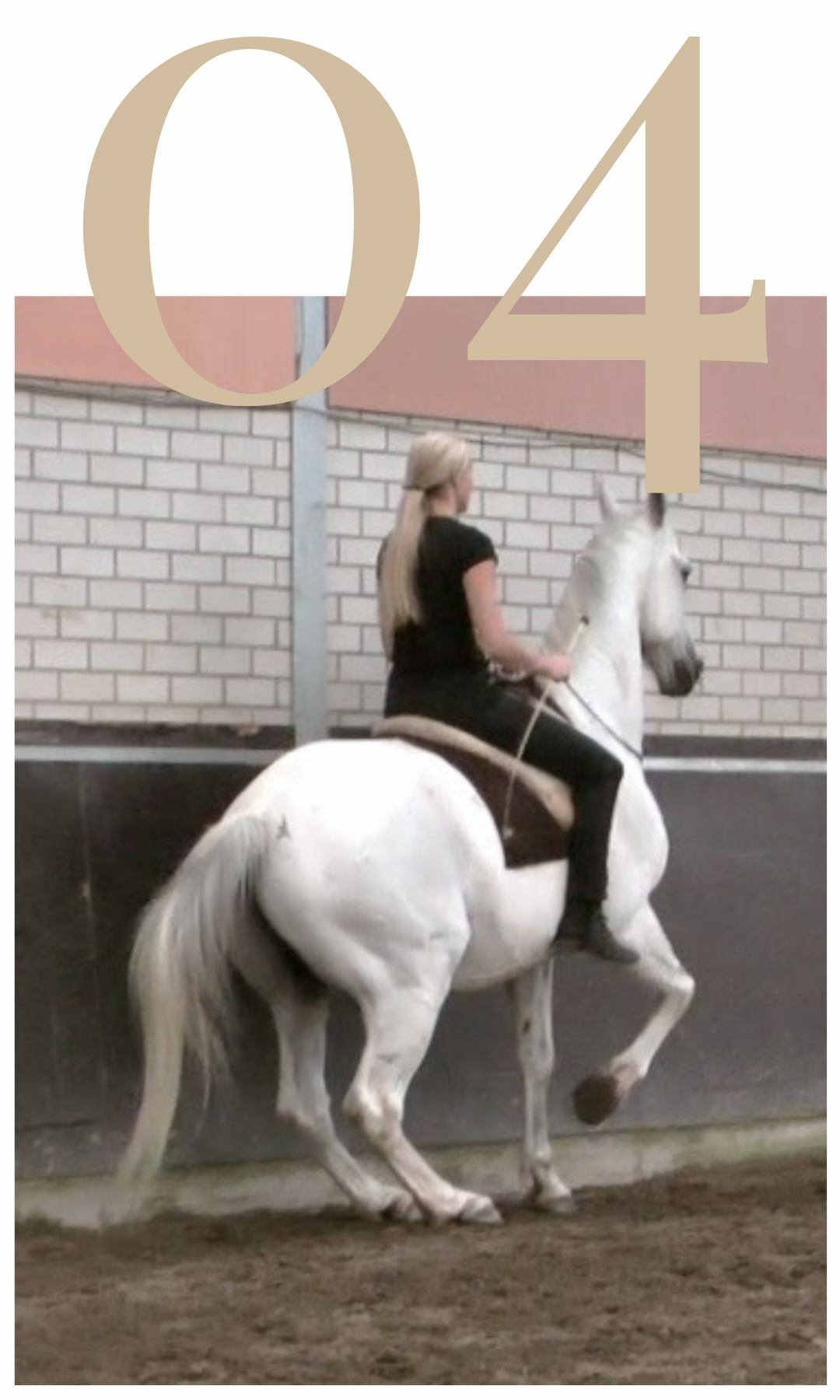 Riding
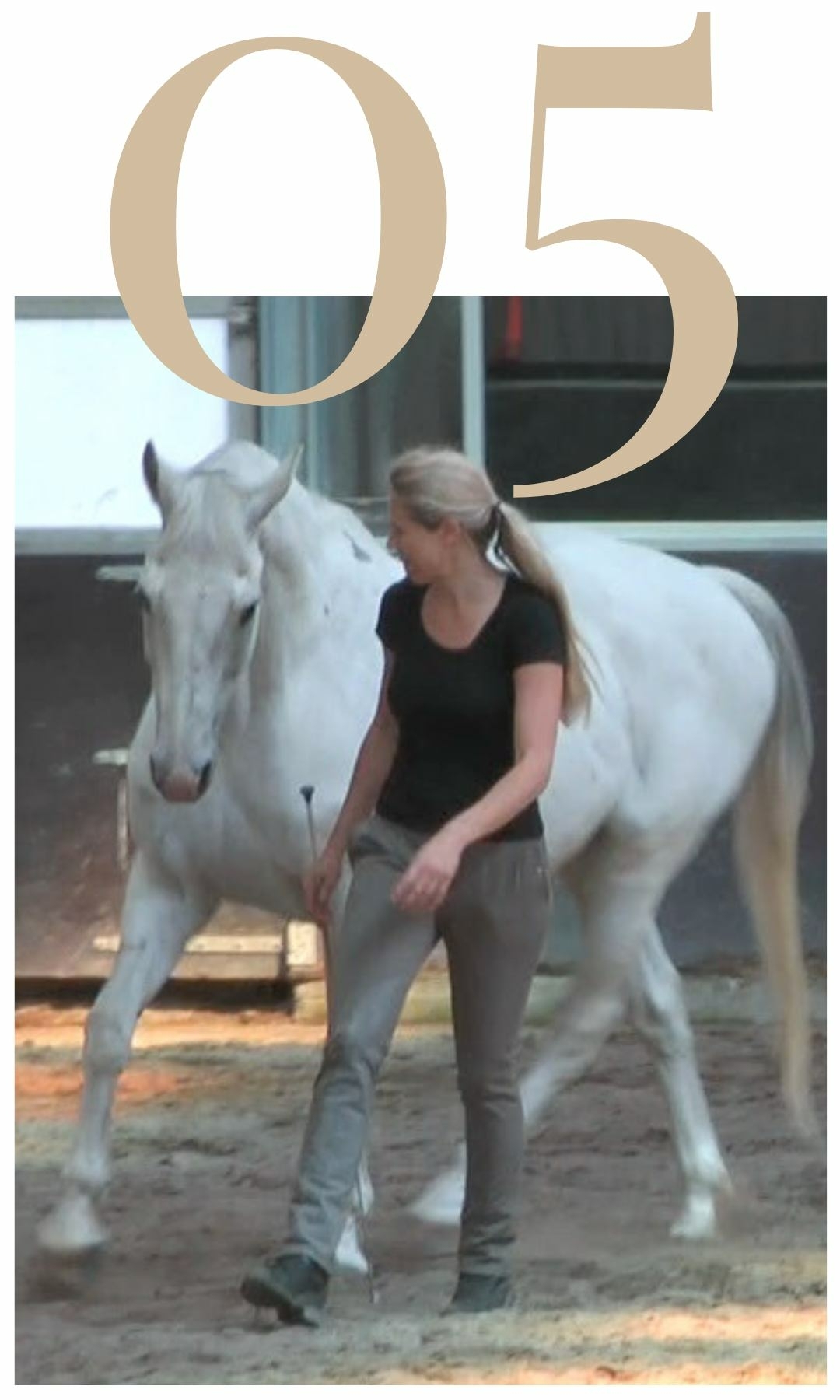 Liberty
Each pillar builds on the previous one. Work in hand is the bridge between groundwork and riding.
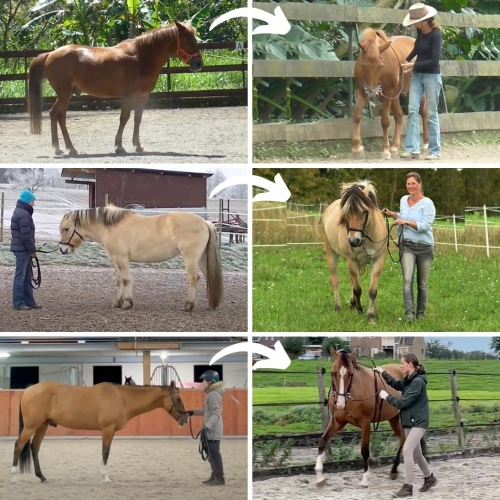
What changes when you do work in hand
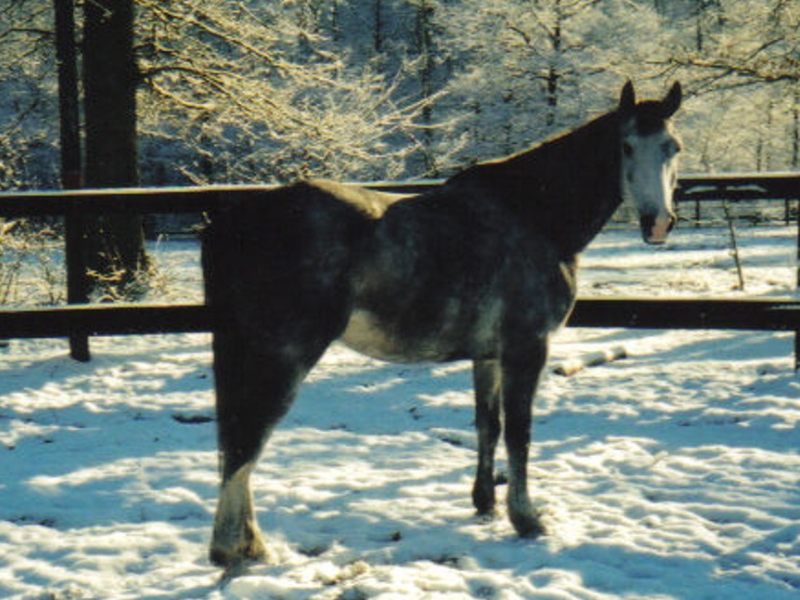
Before
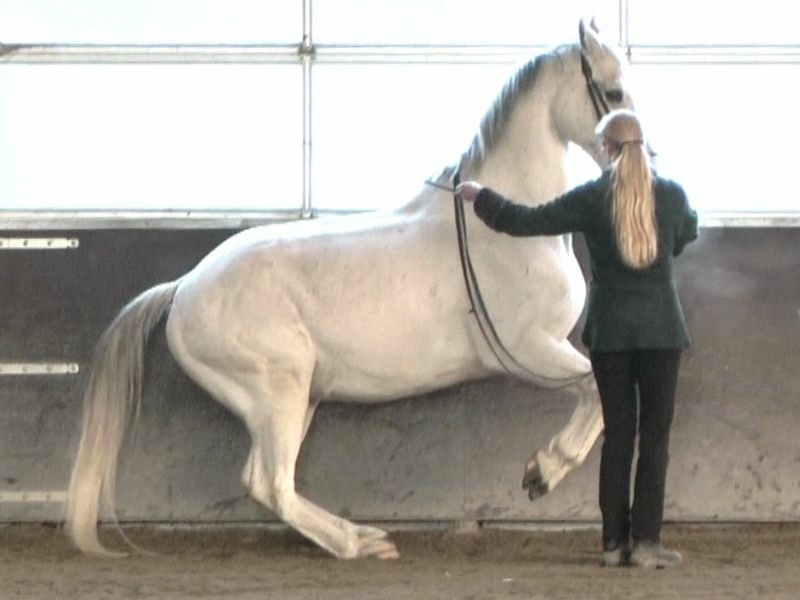
Basic work in hand
Work in hand starts with simple but essential gymnastic exercises:
With these exercise you learn to influence your horse's front and hind legs, and your horse learns to respond in a prompt, precise and polite way.
Even short training sessions can improve the coordination in the legs and help your horse's body develop symmetrically.
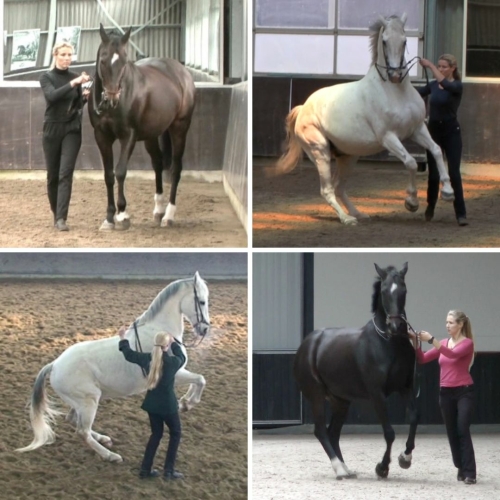
Once the basics are established, work in hand evolves into gymnastic exercises such as:
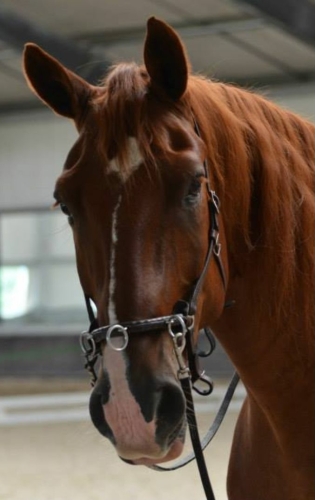
How to start
Work in hand builds on groundwork.
You start with the first 3 keys of Straightness Training and using the inside rein:
From there, you introduce the outside rein, so you can start influencing the shoulders.
You work next to your horse, step by step by step, which helps your horse to understand each exercise before it is asked under saddle.
Work in hand is training your horse from the ground using two reins. It forms the bridge between groundwork and riding, making it easier for both rider and horse to understand the rein aids.
2. What is the difference with groundwork?
Groundwork is done with one rein or line. Work in hand is done with an inside rein and an outside rein. This allows both you and your horse to understand how to use the reins, both directly to influence the head and indirectly to influence the shoulders.
3. Is work in hand difficult to learn?
No. It takes practice, but it is very logical. When you follow a clear system, both you and your horse will understand it step by step.
4. Can I do work in hand with any horse?
Yes, every horse can benefit from work in hand, regardless of age or level. With more sensitive or expressive horses (such as stallions or horses that nip), your timing and skill become more important.
5. Will this help with riding?
Yes. Work in hand prepares your horse for riding. What your horse learns in hand will translate into better balance, responsiveness, and clarity under saddle.
What most riders completely miss, and how it's affecting your horse.
In this free guide, you’ll discover: